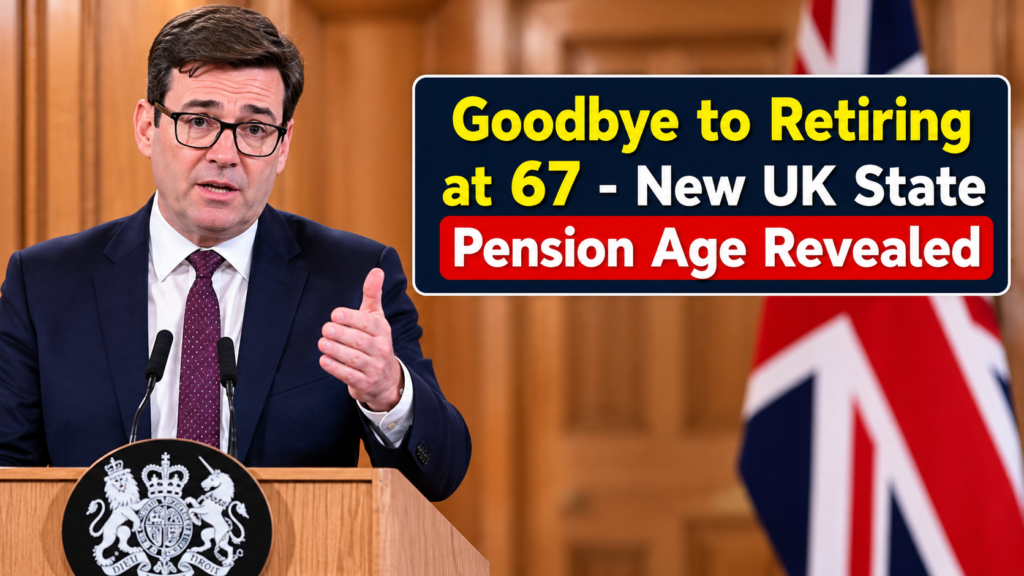
The UK State Pension age is once again attracting attention as millions of people look closely at when they will become eligible for government retirement payments. The State Pension age is not the same as the age at which someone must stop working, but it is the age at which eligible people can normally begin receiving their State Pension. Under the current timetable, the State Pension age is increasing from 66 to 67 between 2026 and 2028, meaning some people approaching retirement may need to wait longer than expected before receiving their State Pension.
UK State Pension Age Is Changing
The UK State Pension age for men and women is currently 66, but it is scheduled to rise gradually to 67 between April 2026 and April 2028. The change will not affect everyone at exactly the same time because eligibility depends on a person’s date of birth. This means people approaching retirement should check their individual State Pension age rather than relying on a general retirement-age figure. The government has introduced the increase gradually so that affected workers have time to understand how the change could affect their retirement plans and finances.
Goodbye to Retiring at 67 – What Does It Mean?
The phrase “Goodbye to Retiring at 67” can easily create confusion because the UK government does not require every person to continue working until their State Pension age. People can choose to retire earlier if they have sufficient savings, a workplace pension or other sources of income. The important change concerns when a person becomes eligible for their State Pension. If someone decides to stop working before reaching their State Pension age, they may need to use other financial resources until their government pension becomes available.
Why Is the State Pension Age Increasing?
The government reviews the State Pension age partly because people are living longer and the UK’s population is changing. When people spend more years in retirement, the government may have to pay State Pension benefits for a longer period. At the same time, changes in the number of working-age people compared with pensioners can affect the long-term sustainability of the pension system. These demographic and economic factors are among the reasons why governments periodically review the State Pension age and consider whether future changes are necessary.
Could the State Pension Age Rise to 68?
A future increase beyond 67 is another issue that has received considerable attention. Under current legislation, the State Pension age is scheduled to rise to 68 at a later stage, although the timetable for future increases can be reviewed by the government. This means younger workers should not necessarily assume that 67 will remain their State Pension age forever. Any significant future change would be subject to the government’s review process and the necessary legal steps, so people should rely on official announcements rather than social media claims about a confirmed new age.
State Pension Age Is Different From Retirement Age
One of the most important points for workers to understand is that State Pension age does not mean there is a compulsory retirement age of 67. A person may decide to leave employment earlier or continue working after reaching State Pension age, depending on their circumstances and employment arrangements. The State Pension age simply indicates when an eligible person can normally start receiving their State Pension. Therefore, someone who wants to retire early needs to consider how they will financially support themselves during the period before their State Pension begins.
Check Your Personal State Pension Age
Because the State Pension age depends on date of birth, people should check their own individual State Pension age using the official UK government service. This is particularly important for people approaching their 60s because the gradual increase to 67 means that different birth dates can result in different State Pension ages. Checking the personal date can help workers understand how much time they have left before State Pension payments can begin and can also make retirement planning much easier.
National Insurance Record Is Important
A person’s National Insurance record is an important part of their State Pension entitlement. Generally, people need at least 10 qualifying years on their National Insurance record to receive any new State Pension, while 35 qualifying years are normally needed for the full new State Pension for someone with no gaps or other circumstances affecting their entitlement. However, individual pension records can be different, so workers should check their own National Insurance history rather than assuming that they will automatically receive the full amount.
Check Your State Pension Forecast
People planning for retirement should also check their State Pension forecast because it can provide an estimate of how much State Pension they may receive and when they are expected to receive it. The forecast can also help people understand whether they may have opportunities to improve their entitlement through additional qualifying National Insurance years. Checking this information early can give workers more time to review their retirement plans and decide whether they need additional savings or pension income to achieve their desired lifestyle.
What If You Want to Retire Before 67?
People do not have to wait until State Pension age to stop working, but retiring early means they may need another source of income. Someone who stops working several years before their State Pension age could use workplace pension savings, a private pension, investments or personal savings during that period. The amount needed will depend on individual spending and financial circumstances. Anyone considering early retirement should therefore calculate how much income they will need before their State Pension begins and consider how early pension withdrawals could affect their long-term finances.
Workplace and Private Pensions Matter
As the State Pension age changes, workplace and private pensions can play an increasingly important role in retirement planning. Many employees build retirement savings through workplace pension schemes, while some people also have personal pensions or other investments. These sources of income can potentially provide greater flexibility over when someone stops working. However, pension access rules and the financial consequences of taking money early can vary, so people should carefully review their own pension arrangements before making major retirement decisions.
What Does This Mean for Younger Workers?
Younger workers may have many years before reaching State Pension age, but future pension changes are still worth considering when planning for retirement. The State Pension age can be reviewed as demographic and economic conditions change, meaning younger generations could face different rules in the future. Building workplace pension savings, maintaining a strong National Insurance record and developing additional retirement savings can help provide greater financial flexibility. Relying solely on the State Pension may not be enough for everyone, particularly for people who want to retire earlier than the State Pension age.
Final Word on the New State Pension Age
The UK government is not simply ending retirement at 67 or introducing one completely new retirement age for everyone. The key change is that the State Pension age is rising from 66 to 67 between 2026 and 2028, while a future increase to 68 is already provided for under current legislation, subject to review and the relevant legal process. For anyone approaching retirement, the best approach is to check their personal State Pension age, State Pension forecast and National Insurance record through official government services so they can make informed decisions about their retirement and financial future.